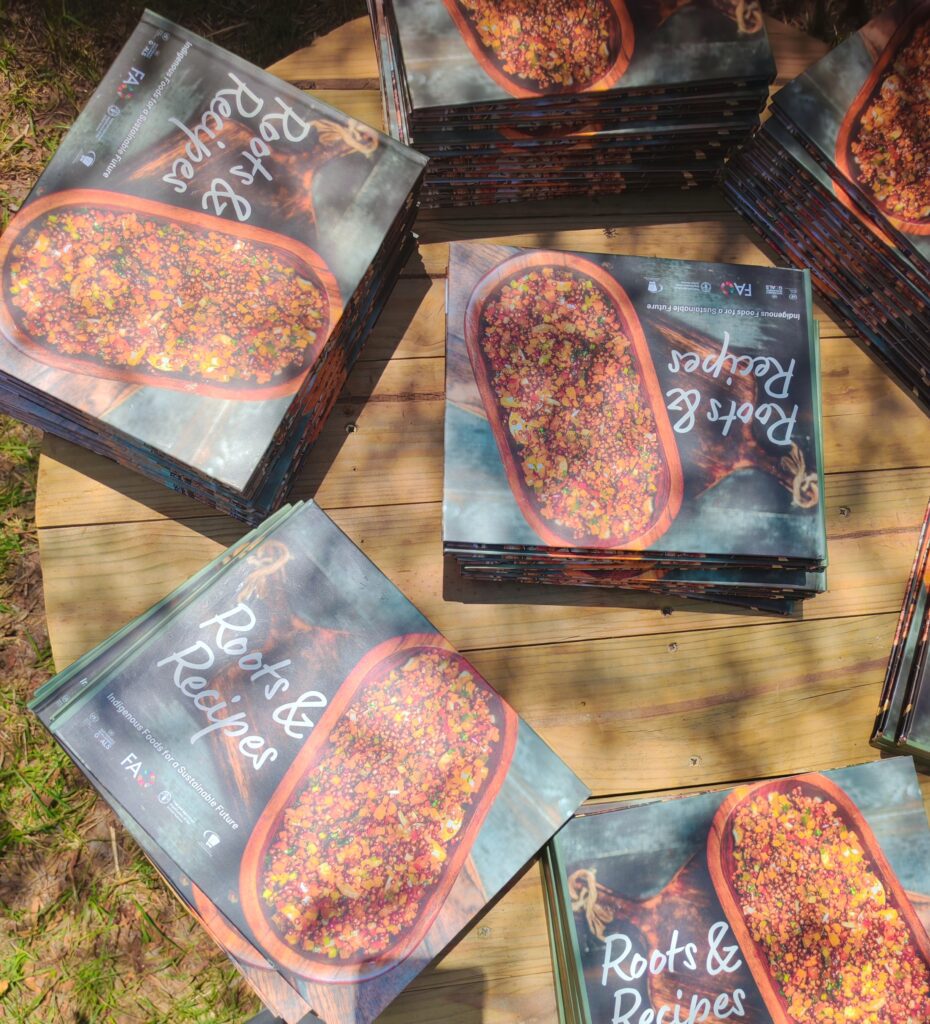
Lishe reflects on the Roots & Recipes launch, showing how indigenous foods and sustainable agriculture strengthen holistic wellness, culture, and community.
As a holistic wellness publication, Lishe views agriculture as the foundation of wellbeing.
Because wellness does not begin in the kitchen.
It begins in the soil.
The health of the soil determines the health of our food.
The health of our food determines the health of our bodies.
The health of our bodies determines the health of our communities.
This truth was powerfully echoed during the launch of Roots & Recipes: Indigenous Foods for a Sustainable Future at Nirox Sculpture Park — a setting symbolic of origin, memory, and human continuity.
What unfolded that afternoon was more than a cookbook celebration. It was a reframing of the food conversation in South Africa.
In her address, MEC Vuyiswa Ramokgopa reminded guests that reclaiming indigenous foods is not an act of nostalgia — it is an act of resilience.
In an era marked by climate shocks, soil depletion, ultra-processed diets, and widening inequality, indigenous crops were positioned not as “heritage items,” but as future-facing solutions.
She spoke of sorghum, millet, morogo, amadumbe and cowpeas not merely as ingredients, but as climate-resilient, water-efficient crops capable of strengthening food security in a fragile global food system.
And perhaps most powerfully, she reminded us:
Food is culture.
Food is political.
Food drives economies and entrepreneurship.
Food is power.
These words align seamlessly with Lishe’s editorial direction.
Because holistic wellness cannot be reduced to supplements, trends, or aesthetics. It is ecological. It is economic. It is cultural.
Holistic wellness cannot exist without food sovereignty.
Food sovereignty cannot exist without sustainable agriculture.
Sustainable agriculture cannot exist without respecting indigenous knowledge systems.
For too long, African food systems have been framed as backward, informal, or inferior to imported standards of “health.” Yet our ancestors’ diets were seasonal, plant-rich, diverse, and deeply ecological long before wellness became an industry.
To restore indigenous crops is to restore biodiversity.
To restore biodiversity is to restore nutrient density.
To restore nutrient density is to restore public health.
The MEC further emphasised that promoting indigenous crops supports smallholder farmers, rural women seed custodians, youth entrepreneurship, and climate action — aligning with broader goals of Zero Hunger and sustainable development.
This is where agriculture becomes wellness policy.
Because every recipe has an economy behind it.
Every crop has a climate implication.
Every food choice has a systems consequence.
For Lishe, this reinforces a core belief:
Wellness is systemic.
It is not isolated to individual bodies; it flows through supply chains, farming practices, markets, and memory.
When we restore indigenous crops to our plates, we are strengthening immunity through micronutrient diversity.
When we support local farmers, we are strengthening rural economies and reducing dependency on fragile imports.
When we preserve traditional food knowledge, we are strengthening identity and psychological belonging.
Food insecurity is not only about hunger.
It is about dignity.
It is about agency.
It is about who controls nourishment.
To speak of gut health without soil health is incomplete.
To speak of mental wellness without cultural continuity is insufficient.
To speak of sustainability without indigenous agriculture is contradictory.
If we truly want resilient communities,
we must cultivate resilient food systems.
And that work does not begin in policy documents or supermarket aisles.
It begins beneath our feet.
At Lishe, we remain committed to amplifying conversations that reconnect wellness to land, culture, and agricultural intelligence — because the future of health will not be imported.
It will be grown.